


What We Do
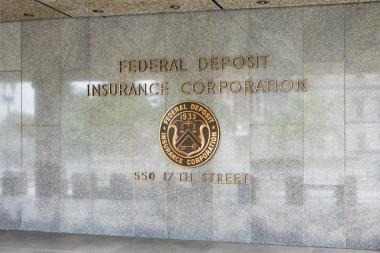
The mission of the Federal Deposit Insurance Corporation (FDIC) is to maintain stability and public confidence in the nation's financial system. In support of this goal, the FDIC:
- Insures deposits,
- Examines and supervises financial institutions for safety and soundness and consumer protection, and
- Resolves failed banks.
An independent agency of the federal government, the FDIC was established in 1933 in response to the thousands of bank failures that occurred in the 1920s and early 1930s. Learn more about the history of the FDIC.
The FDIC receives no Congressional appropriations - it is funded by assessments that banks and savings associations pay for deposit insurance coverage. The FDIC insures trillions of dollars of deposits in U.S. banks and savings associations - deposits in virtually every bank and savings association in the country.
Deposit Insurance
The standard insurance amount is $250,000 per depositor, per insured bank, for each account ownership category. Since the start of FDIC insurance on January 1, 1934, no depositor has lost a penny of insured funds as a result of a failure. The FDIC's Electronic Deposit Insurance Estimator can help you determine the amount of deposit insurance for your accounts. The FDIC insures deposits only. It does not insure securities, mutual funds, or other types of investments that banks and savings associations may offer.
Learn more about deposit insurance.
Supervision & Examination
The FDIC insures the deposits in more than 4,000 financial institutions and directly supervises and examines over 2,700 banks and savings associations for safety and soundness. Banks can be chartered by states or by the Office of the Comptroller of the Currency. Banks chartered by states also have the choice of whether to join the Federal Reserve System. The FDIC is the primary federal regulator of banks that are chartered by the states that do not join the Federal Reserve System. In addition, the FDIC may serve as back-up supervisor for the remaining insured banks and savings associations.
The FDIC also examines banks for compliance with consumer protection laws, including the Community Reinvestment Act, the Fair Credit Billing Act, the Fair Credit Reporting Act, the Truth in Lending Act, and the Fair Debt Collection Practices Act.
Resolutions
To protect insured depositors, the FDIC responds immediately when a bank or savings association fails. Institutions generally are closed by their chartering authority - the state regulator or the Office of the Comptroller of the Currency. The FDIC has several options for resolving institution failures, but the most common is to sell the deposits and loans of the failed institution to another institution. In such cases, customers of the failed institution automatically become customers of the assuming institution.
Where We Are
The FDIC is headquartered in Washington, DC, and has established regional and field offices around the country.
Who We Are
The FDIC is managed by a Board of Directors of up to five members, including the Comptroller of the Currency and the Director of the Consumer Financial Protection Bureau, all of whom are appointed by the President and confirmed by the Senate, with no more than three being from the same political party.
For more information about the FDIC’s mission and operations, please be sure to browse the additional information offered in the About section of this website.