


In This Issue
- Preparing for Tax Time
- Success Story: First Commonwealth Bank Delivers 2500+ Money Smart Sessions
- Submit Your Money Smart Success Story
- Upcoming Events
Send us your Money Smart success stories at ConsumerEducation@fdic.gov.
Preparing for Tax Time
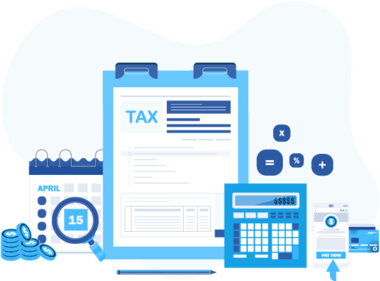
January kicks off tax season, a time when households begin gathering documents and planning for refunds or payments. The free FDIC Money Smart curricula offer helpful tools and resources to make the process smoother.
Money Smart for Adults provides guidance on organizing financial records, understanding tax-related documents, and identifying reliable sources for free or low-cost tax preparation assistance. The curriculum also highlights ways tax refunds can support financial goals, such as building an emergency fund, paying down debt, or starting a savings plan.
The How Money Smart Are You? free online learning experience reinforces key skills for tax season, including managing income, tracking expenses, and protecting personal information.
Money Smart for Older Adults explains how to avoid common tax-related scams—such as fraudulent refund offers, fake IRS calls, and imposter scams that increase during tax season.
Individuals without a bank account can also visit FDIC: GetBanked to explore safe, affordable banking options—helping ensure faster access to tax refunds and a secure place to save.
Learn more at FDIC.gov/MoneySmart.
Success Story: First Commonwealth Bank Delivers 2,500+ Money Smart Sessions Across PA & OH
This month, we interviewed long-time Money Smart user and Money Smart Alliance member, Anna Frank, Financial Education Program Coordinator, First Commonwealth Bank. Anna shared how the community bank (headquartered in Indiana, Pennsylvania) has used the FDIC’s Money Smart suite since 2010 to fulfill its mission of improving the financial lives of its neighbors and their businesses in Ohio and Pennsylvania.
Tell us about First Commonwealth Bank and your role.
“Our mission at First Commonwealth Bank is to improve the financial lives of our neighbors and their businesses, and Money Smart is one of our favorite ways to live to that mission.
I’ve been our Financial Education Program Coordinator since 2010. Before that, I was already passionate about financial education in my pre-bank career. Having someone dedicated to this work really helps—someone who researches the resources, coordinates logistics, and frees our bankers to focus on the fun part: teaching. Money Smart has been a natural fit because it’s comprehensive, relevant, up-to-date, and very easy to use.”
How broadly does the bank use Money Smart? Who participates?
“Between 150-200 bankers have taught at least one Money Smart session in the last couple of years. Some teach a single class; others volunteer for our larger events, like Reality Fairs.
Since 2010, we’ve delivered over 2,500 Money Smart sessions reaching more than 23,000 participants. Roughly 60% of our teaching is with school-age youth— from brief elementary lessons to the high school curriculum. The other 40% are with adults, college students, and older adults through nonprofits, libraries, and community groups.
Class sizes range from two people in a virtual class to a full room at a library, but on average we see 10-15 participants.”
How do you choose and tailor Money Smart topics?
“We start by putting the Money Smart curriculum on the table—like a menu—because almost everything partners want is already there. It also reassures schools that the content is credible and not sales-focused.
We mostly tailor for time, selecting the key activities. Sometimes we combine topics—half budgeting, half credit—by selecting a few activities from each. The curricula makes that easy. The facilitator guides are so well-designed that even bankers new to presenting can feel confident.”
Are (Money Smart) sessions mostly in person or virtual?
"About 85% are in person, and 15% virtual. Kids strongly prefer (Money Smart) in person. Virtual sessions work especially well for nonprofits serving adults since they eliminate travel time. In both formats, we keep the sessions engaging and encourage questions throughout.”
How do your Reality Fairs work?
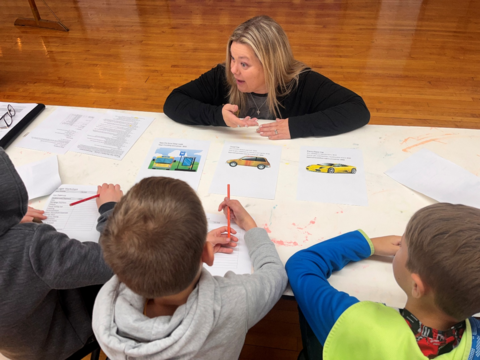
“I love (Money Smart) Reality Fairs. If a bank isn’t sure where to start, I say: do one Reality Fair—just one—and it won’t be your last.
We recently had 25 bankers support about 250 kids at a Boys and Girls Club event. Students move through stations making decisions about transportation, housing, and budgeting. For younger kids, we simplify the budget sheets and use photos for their choices.
High school Reality Fairs take about 2.5 hours; younger students about 1 to 1 hour 15 minutes. They’re fun, hands-on, and give everyone a role—even people who fear public speaking more than death.”
Have a Money Smart success story? Send it to ConsumerEducation@fdic.gov. It may be included in a future newsletter.
Upcoming Events
- On January 27, 2026, from 1-2:30 p.m. ET, join the FDIC for a national webinar highlighting tax-time opportunities and financial education resources to help banks and community organization support low- and moderate-income communities in accessing free tax preparation, direct deposit of refunds, and pathways to savings and banking relationships. Register here!
- On February 25, from 1-2:30 p.m. ET, the FDIC will host a Money Smart for Young Adults Train-the-Trainer to highlight the curriculum and share practical tips for planning and delivering effective financial education for young adults. Register here!
For more consumer resources, visit FDIC.gov, or go to the FDIC Knowledge Center. You can also call the FDIC toll-free at 1-877-ASK-FDIC (1-877-275-3342). Please send your story ideas or comments to ConsumerEducation@fdic.gov. You can subscribe to this and other free FDIC publications to keep informed!