



Youth Financial Education and Its Impact on Adult Financial Decisions

According to a recent study by the Federal Reserve Bank of Kansas City, students who take personal finance coursework in high school are significantly less likely to grow into adults who are unbanked. And those who remain unbanked are less likely to express disinterest in opening a bank account. In other words, early exposure to financial education doesn’t just build knowledge, it shapes confidence, encourages engagement with the banking system, and helps set young people on a more secure financial path.
Money Smart has multiple resources that can assist with teaching young people about money:
- Money Smart for Young People features four, free age-appropriate curricula that promote financial understanding and are specifically designed for Pre-K through 12th grade educators.
- Money Smart Basics for Kids includes nine chapters, which introduces basic banking terms to children, who are beginning to learn about finances.
- Money Smart for Young Adults provides participants with practical knowledge, skills-building opportunities, and resources they can use to manage their finances with confidence.
- Guide to Organizing a Reality Fair helps organizers plan and execute a fair. A Reality Fair is a simulation of an adult’s financial life that provides youth with an interactive experience for making real world financial decisions and managing money.
Success Story: How One Nebraska Banker Brought Financial Education to Summer Camp
This month we spoke with Deb Rouse from Heritage Bank in Grand Island, Nebraska. Deb has spent more than three decades in banking but also has experience teaching in an elementary school. This past summer she was able to blend her background in education and her passion for banking by bringing the Money Smart for Young People curriculum to the Stick Creek Kids Summer camp in Wood River, Nebraska.
After a colleague introduced her to the resources, Deb jumped right in. She used the PreK-2 and grades 3-5 curriculum to build a three-day “Bankers Camp” for a group of about 8-12 kids. She hand-picked the lessons and leaned on the warm-ups, story prompts and grade level modifications for a customized experience. Deb found that the games were a huge hit that kept even the youngest learners engaged. Her favorite lessons were the ones that explained needs versus wants. She paired this with a tour of the safety-deposit boxes and demonstrating how the money counting machine works to keep the children engaged.
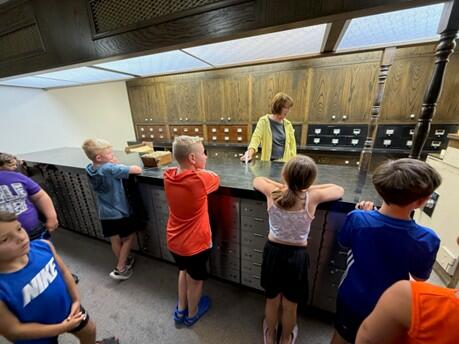
“This has opened the eyes of children to see what banking is about. They go home and tell their parents. This program has sparked conversations at home and encouraged families to get involved.”
After a successful first year, Deb hopes to return next summer to do it again. “I recommend this program to anyone looking for a well-designed, kid-friendly financial education tool.”
Send us your Money Smart success story to ConsumerEducation@fdic.gov. We look forward to highlighting your programs in a future edition of this newsletter.
Upcoming Events
On February 25, the FDIC will host a Money Smart for Young Adults Train-the-Trainer webinar to highlight the curriculum and share practical tips for planning and delivering effective financial education for young adults. Register here.
For more consumer resources, visit FDIC.gov, or go to the FDIC Knowledge Center. You can also call the FDIC toll-free at 1-877-ASK-FDIC (1-877-275-3342). Please send your story ideas or comments to ConsumerEducation@fdic.gov. You can subscribe to this and other free FDIC publications to keep informed!